Hackathons train culture, not just code: Small teams, short cycles, real demos build habits that scale beyond the event.
AI and vibecoding accelerate everything: From prompts to prototypes, AI makes hackathons faster and more inclusive without losing human judgment.
Proven at KeyValue: From KeyCode 2024’s 24-hour marathon to KeyCode 2025’s 12-hour sprint, and Vibeathon’s 4-hour bursts, hackathons keep shaping how we build and ship.
Hackathons have survived every tech wave for a reason. Now, with AI in the loop, the clock matters even more.
When time is fixed and the goal is visible, teams stop overthinking and start building. Add vibecoding to that equation, and the first draft moves faster without removing human judgment. A small, cross-functional group working toward one working demo creates a level of focus and alignment that meetings rarely achieve.
That is why hackathons feel especially relevant today. They replace talk with action, handoffs with collaboration, and promises with demos.
Even as AI accelerates the build, the fundamentals stay the same: short cycles, clear ownership, honest feedback, and real outcomes. AI may accelerate the build, but the clock still shapes the discipline. Together, they make hackathons a serious tool for teams that want to move faster without losing clarity.
How vibecoding changes the hackathon rhythm
Vibecoding is gaining traction, but it is not about skipping engineering fundamentals.
It is about using AI deliberately to move faster on the obvious parts, while engineers stay responsible for structure, correctness, and judgment.
What teams actually do with AI
Expand ideas quickly with structured prompts.
Generate scaffolds for routes, components, and tests.
Write and refactor code faster with AI support.
Use quick AI reviews to spot risky code paths early.
Polish UI copy and labels so the flow feels clear.
At KeyValue, we shipped the ScanPay Estimate feature in 8.5 days with AI in the loop. The same scope usually takes about 35 days, and we got there by scoping one clear flow, leveraging vibecoding and reviews, and running daily demo checkpoints.
KeyCode and Vibeathon: Two gears, one builder culture
At KeyValue, we run hackathons in two formats that work together.
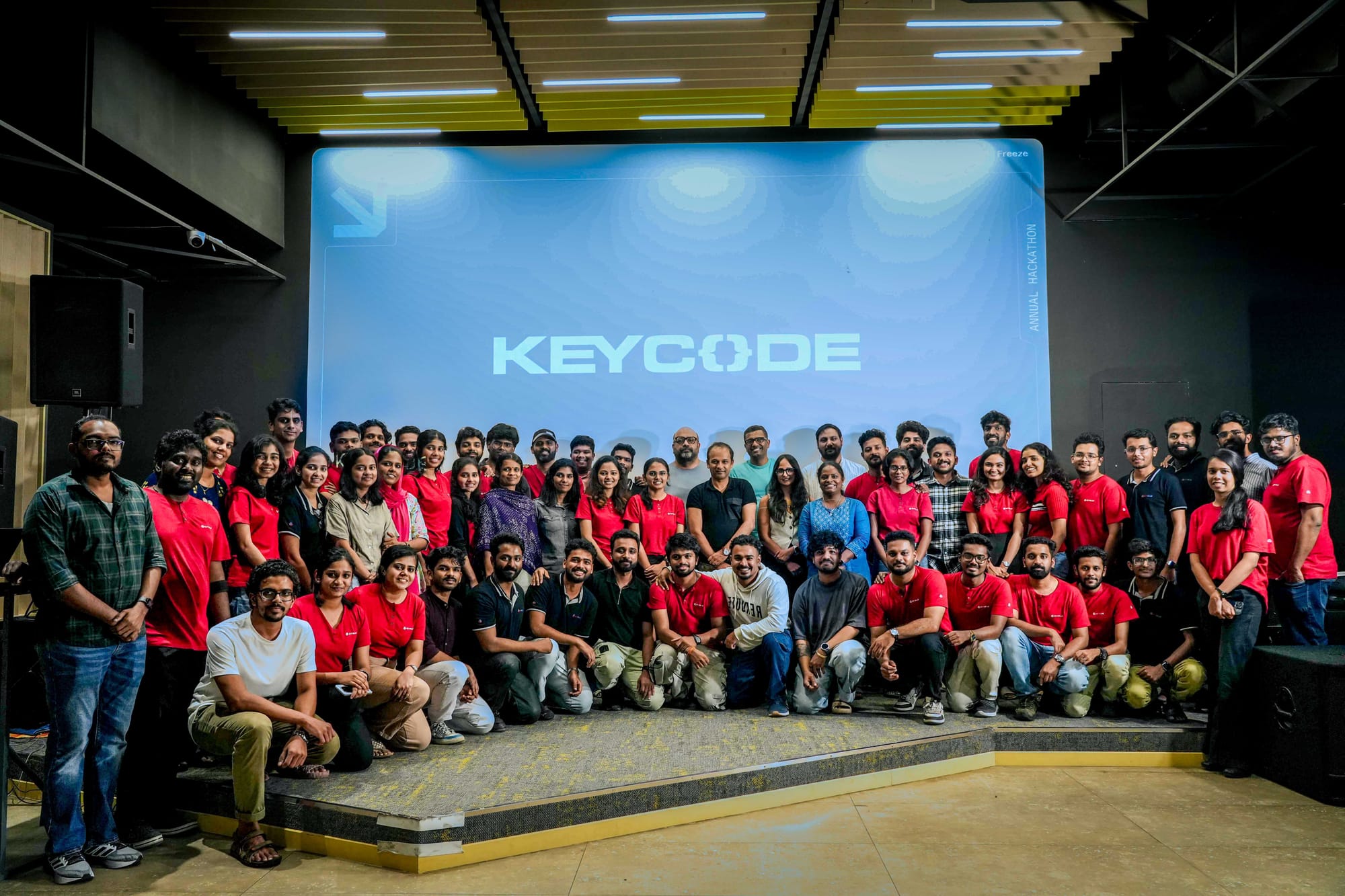
KeyCode is our annual hackathon where teams build end to end.
Vibeathon is our 4 hour vibecoding sprint that builds pace.
One trains depth. The other trains momentum. Together, they shape an engineering culture that ships.
In 2024, KeyCode ran in its classic 24-hour format. In 2025, we experimented with a 12-hour sprint, keeping the same energy but pushing for sharper focus. Both formats carried the same spirit: real collaboration under the clock, ending with a working prototype.
KeyCode — 24-hour hackathon for deep, end-to-end building
Our most celebrated hackathon of the year. KeyCode brings the entire company together around open problems, big ideas, and a single goal: build something real within a day.
Teams form across disciplines and experience levels. The themes are open, but the bar is clear. By the end, something usable must exist.
The rhythm stays simple and intense:
Build through the night with focus and momentum
Cut scope at midnight to protect the core idea
Polish flows and edge cases in the morning
Demo working products to a full room
What makes KeyCode different is the ecosystem around it.
Founders, leaders, clients, and partners act as guides and mentors, not judges from a distance. They challenge assumptions, share context, and help teams think sharper.
Real incentives matter. With prize money of up to ₹5L, teams treat the problems seriously and push for quality, not just novelty.
Ideas do not end at demos. Strong prototypes often move forward into real builds, internal tools, or client-facing solutions.
Pressure builds maturity. Teams learn integration, data shape, edge cases, and calm decision-making under time constraints.
Collaboration shows up clearly. You see how people listen, lead, unblock, and ship together when time is scarce.
KeyCode is where depth is tested. It shows what teams can build when the clock is tight, the stakes are real, and the whole company is watching.
Vibeathon: A 4-hour hackathon to train speed with AI
Our mini hackathon. Our speed lab. Vibeathon is designed to move teams from idea to code in a single sitting, with AI in the loop from minute one.
The problems are small by design. The goal is not to build everything, but to build one clean click path that works.
Vibeathon runs on a simple mission:
Use AI to go from idea to working code as fast as possible
Treat AI as a collaborator, not a shortcut
Learn by building, then sharing how it was built
The format keeps things light but focused:
Runs for four hours, often in an evening
No heavy prep or long ceremonies
Easy to conduct without disrupting regular work
What makes Vibeathon effective is how learning compounds:
Senior engineers mentor and pair with others, sharing how they prompt, review, and decide
Internal teams judge the demos, keeping the bar practical and relevant
Teams often clone popular apps to train pace, UI judgment, and flow design before moving to zero-to-one ideas
Vibeathon 1.0 focused on clone-and-reimagine to build speed and confidence.Vibeathon 2.0 flipped to a blank slate, pushing teams to create something new under the same tight clock.
What teams walk away with:
Ruthless scoping and fast decisions
Better understanding of AI tools through shared use
Pooled knowledge as teams observe how others prompt, code, and polish
Clean UI, tight feedback loops, and demos that just work
Vibeathon delivers rich takeaways without the overhead of a full-scale hackathon. It is fast, repeatable, and ideal for building momentum.
Hackathons to hunt new talents
Hiring new talent in product engineering needs a revamp.
The old mix of interviews, group discussions, and written tests is not something you can always rely on. This is where hackathons help.
We ran a four hour, in-office recruitment hackathon with more than 100 students. Small teams got one clear brief. They built one working user flow. Then they showed it live. No puzzles. No trick questions. Just real work in a real setting.
How a hackathon helps with hiring
Real skills, not rehearsed answers: you see how people plan, build, and finish.
Teamwork you can watch: who leads, who helps, and how they communicate.
Speed with care: good builders cut scope but keep quality.
AI use in the open: the best candidates use AI to move faster and safer.
Fast, clear signal: offers come from working demos, not guesswork.
Culture fit you can feel: the format rewards helpful, calm, and focused people.
Hackathon culture at KeyValue: What it changed for us
Running hackathons often has changed how we work.
Teams focus on one clear flow, cut noise fast, and show progress early. That rhythm has strengthened our engineering culture and made “ship small, ship often” feel normal.
How hackathons changed our engineering
We move faster without losing quality. Pull requests are smaller, reviews are quicker, and demos land sooner.
Scope is cleaner. The timer forces simple choices and keeps the core tight.
AI is part of everyday work. We use it to set up starter code, review code early, and polish UI and copy so people spend time on judgment and craft.
Short build cycles improve problem solving and the way we work together after the event.
How hackathons changed our teams
Trust grows quickly. Engineers, designers, QA, product, and DevOps work side by side under the clock.
Cross-discipline is normal. Hackathons bring different skills into one room and make real collaboration easy throughout the floor.
Being together helps. Face to face time speeds decisions and strengthens bonds.
People ask for help early and unblock each other fast.
New joiners pick up our standards on day one and feel confident sooner.
AI feels simple for everyone. Hackathons demystify AI and even let non-technical teammates significantly contribute to the development.
How hackathon changed our delivery
We talk less about plans and show more working products.
Good patterns survive. After each hackathon, we save starter repos, UI bits, and prompt packs so the next build starts ahead.
Decisions get simpler because real demos turn vague ideas into clear choices.
The approach works in many settings. Hackathons push innovation regardless of industry, which keeps our practice versatile.
There’s no secret sauce. We use AI in real work every day, and we run hackathons often enough and clearly enough that good habits stick.
How to host a high-impact AI hackathon (KeyValue way)
Keep it simple. Aim for one working flow, put a small mixed squad in a room, and keep a steady rhythm. Here’s the version we actually run.
Before the hackathon day
Set the goal: choose a clear outcome. Decide if you want a theme or no theme.
Set the clock:4 hours (like Vibeathon) for momentum, 24 hours (like KeyCode) for depth.
Form cross-functional squads: engineering, design, QA, product, and DevOps. Bring a mix of people from different domains.
Clear the basics upfront: which tools teams can use, what they should build from scratch, and what data is safe to use.
Share an AI starter kit: tools to use, vibecoding tips (start rough, then refine), and quick review prompts.
In person works best: Teams move faster and trust builds naturally.
Be clear on what “done” means: one working flow, a quick explanation, and a short demo.
During the hackathon day
Keep a simple rhythm: short kick-off standup, then 5-minute standups each hour with quick mid-hour reviews.
Protect the core: if in doubt, cut scope, not quality.
Stick to time: the clock is part of the learning.
Have mentors on call: loop in experts when teams are stuck.
Keep demos short and honest: no slides unless they help explain the flow.
Judging
Score on: usefulness, craft, pace with judgment, teamwork, smart AI use, and extendability.
Give specific public praise: tell teams exactly what worked so they can repeat it.
After the day
Save what worked: reusable code, UI pieces, and prompts so the next team starts ahead.
Give the best idea a short follow-up: one owner, two weeks, and quick demos to see if it holds up.
Take it further only if it earns it: real need, stable basics, and a clear next step.
Plan the next hackathon: repeating it regularly is what turns learning into a habit.
Conclusion: From hack days to habits
Hackathons work because they rehearse how strong teams build under a visible clock: small groups, short cycles, and real outcomes. The tools change, but the fundamentals stay the same.
They also make AI practical under time pressure. Vibecoding turns AI into a daily collaborator, not a novelty, so teams spend more time on judgment, clarity, and craft. What begins as a demo often reshapes how teams plan, build, and decide the very next week.
Here’s the real takeaway: the most valuable thing a hackathon produces is not the prototype, but a team that now knows speed and quality can exist together.
If this way of building excites you, you’ll feel at home here. Explore careers at KeyValue.