For years, outsourced product development was measured by familiar questions.
How many engineers can you provide?How fast can they start?What is the hourly rate?Can they work in our time zone?
Those questions still matter. But in 2026, they will no longer be enough.
The companies winning in product development today are not simply hiring external engineering aptitude. They are choosing partners who can help them build smarter, move faster, and turn AI into a real product advantage.
That is why AI-first outsourced product development companies are pulling ahead of traditional dev shops.
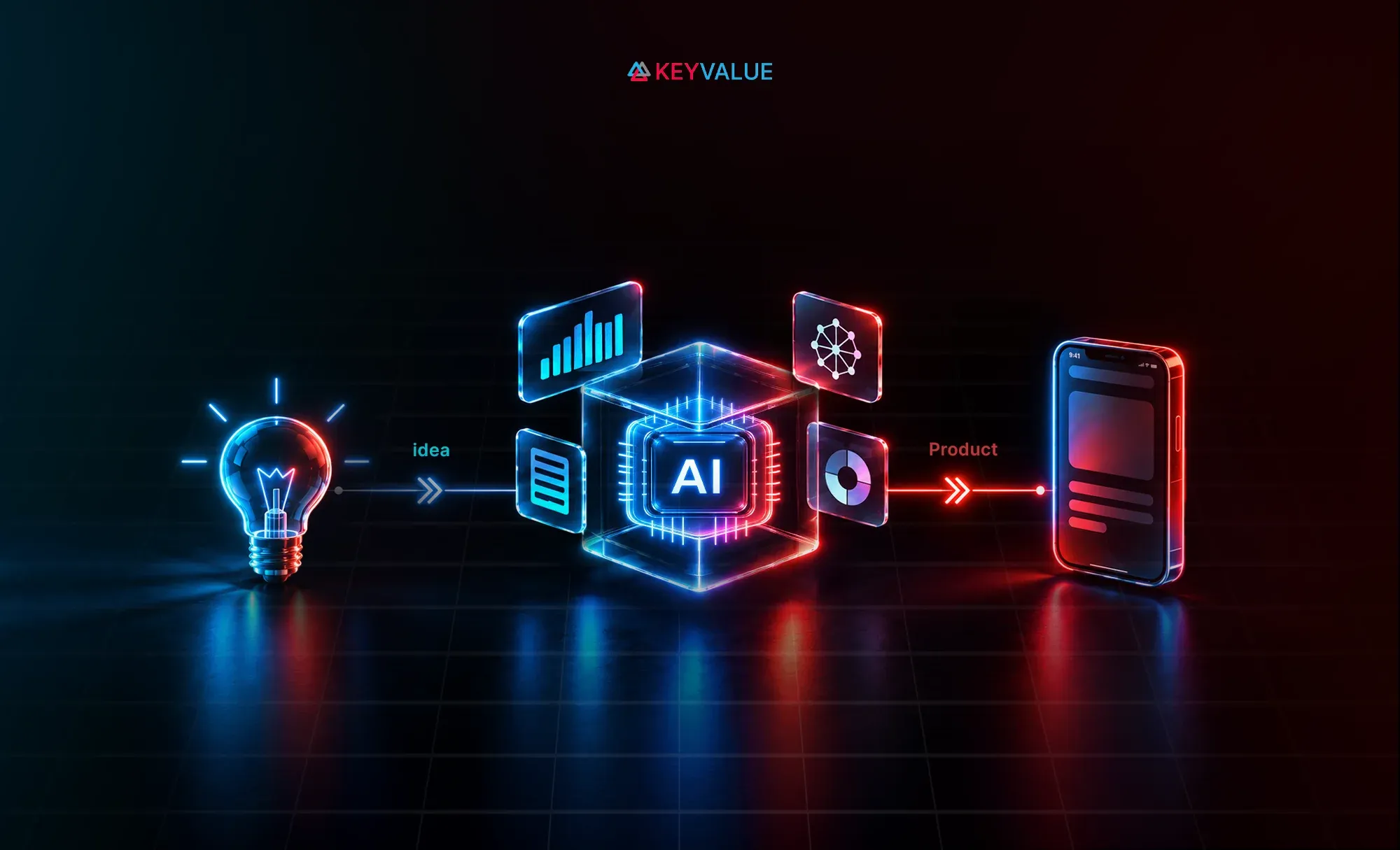
The real shift is not in adding more AI tools to the stack. It is in changing the way teams think about product development from the ground up. From the initial idea through engineering, testing, launch, monitoring, and continuous improvement, AI must be built into the product’s foundation. It should not sit on the surface as an extra feature, but become part of how the product works, responds, and delivers value.
In 2026, the winners are not the teams that write code faster. They are the teams that combine AI capability, product thinking, domain depth, and production discipline.
The old outsourcing model is losing relevance
For a long time, traditional outsourcing was built around cost and capacity. Companies had clear roadmaps, fixed requirements, and a need for more developers to execute predefined tasks. External teams were brought in to extend engineering capacity, move faster, and deliver what had already been planned.
That model worked well when software requirements were more predictable, and speed was mostly a function of team size. But product development no longer works that way.
Modern products are more dynamic. Users expect personalization, automation, instant support, intelligent recommendations, and seamless workflows. Businesses expect shorter release cycles, stronger security, faster experimentation, and measurable product outcomes.
AI has raised the bar even further.
The old model of “give us requirements, and we will build them” is becoming less useful.
The new question is: Can your product development partner help you figure out what AI makes possible, what should be automated, what should remain human-led, and how to ship it safely into production?
What makes a company truly AI-first?
An AI-first outsourced product development company does not treat AI as a separate department or a last-mile enhancement.
It uses AI across three layers.
First, it builds AI into the products it creates. That may include AI agents, copilots, recommendation engines, predictive analytics, computer vision, conversational interfaces, workflow automation, or intelligent decision systems.
Second, it uses AI to improve how the team works. AI can support coding, test generation, bug triage, documentation, design exploration, DevOps automation, and knowledge discovery.
Third, it understands how to take AI from prototype to production. This is where many traditional teams struggle. A demo can be built quickly. A production-ready AI system needs evaluation, monitoring, fallback logic, security, cost control, observability, and human-in-the-loop design.
A production-ready AI agent highlights requirements such as session management, persistent memory, authenticated tool integration, permissions, and real-time logging to trace agent decisions and actions.
One should be able to understand the difference between the companies that experiment with AI and ship AI-first products to choose the right outsourced product development partner.
Why AI-first product partners are winning in 2026?
AI-first partners are winning because they solve the problems traditional dev shops were not designed to solve.
They do not just add engineers to a roadmap. They improve the roadmap itself.
They can identify where AI can reduce friction, automate repetitive workflows, improve decision-making, personalize user journeys, and create new product value. They can also identify where AI should not be used, which is just as important.
This matters because AI-first development is not about adding a chatbot to every product. It is about asking better product questions.
Can this workflow become autonomous?Can this decision be assisted by AI?Can this user journey become more personalized?Can this manual process become agent-led?Can this platform learn from usage patterns?Can this product generate new value from existing data?
Traditional dev shops often wait for answers. AI-first product partners help find them.
The rise of AI agents is changing product development
One of the biggest reasons AI-first outsourced product development companies are gaining ground is the rise of AI agents.
AI agents are not just chat interfaces. They can reason through tasks, call tools, access systems, trigger workflows, make recommendations, and collaborate with humans or other agents.
With agentic AI emerging as the next wave of AI value creation, the benchmark for product development is changing.
A company that has only experimented with AI agents is not the same as one that has built and deployed them in real production environments. Production agents operate with real users, real data, real edge cases, real permissions, and real business consequences.
That is why experience matters. A stronger proof point is working with a product development partner that has already taken AI agents into production, moving beyond demos and internal pilots into real-world systems. It shows that the team has worked on operational, user-facing, and workflow-critical AI systems where reliability, context handling, monitoring, and business impact matter from day one.
A strong benchmark for choosing an AI-first product development partner is not how many AI prototypes it can show, but how many AI systems it has successfully moved from idea to production.
AI-first teams deliver faster without simply adding more people
Speed used to come from larger teams.
In 2026, speed increasingly comes from better systems.
AI-first product development companies can reduce manual effort across the product development lifecycle. AI can help teams explore product ideas faster, generate first-pass code, create test cases, identify regressions, summarize documentation, speed up onboarding, and improve release readiness.
But the real advantage is not raw speed. It is speed with judgment.
AI-first teams know that faster output is only useful when architecture, security, quality, and product direction are protected. They do not use AI to create more noise. They use it to reduce waste, shorten feedback loops, and focus human talent on higher-value decisions.
That is why AI-first companies are not replacing product teams. They are upgrading how product teams work.
Traditional dev shops build features. AI-native partners build systems.
A traditional dev shop may take a requirement and build a feature.
An AI-native product partner asks what system needs to exist around that feature.
For example, an AI-powered support assistant is not just a chat window. It may need a knowledge pipeline, retrieval system, escalation logic, admin controls, analytics dashboard, hallucination checks, audit logs, feedback loops, and integration with CRM or ticketing tools.
An AI-powered fintech workflow is not just a model. It may need compliance checks, explainability, anomaly detection, human approvals, role-based access, and monitoring.
An AI agent for operations is not just a prompt. It may need tool access, permissions, memory, retry logic, task boundaries, cost monitoring, and fallback paths.
This is where AI-first outsourced product development companies stand apart. They understand that production AI is a system design challenge, not just a model integration task.
Product ownership becomes more important in AI-first development
AI-first development increases the need for ownership.
When products become more intelligent, they also become more complex. The team must think about user trust, model behavior, data quality, system reliability, and long-term maintainability.
A task-based team may say, “The AI feature works.” An ownership-driven team asks, “Does it work reliably, safely, and meaningfully for the user?”
That distinction matters.
The best AI-first product partners take responsibility for outcomes, not just outputs. They challenge weak assumptions. They ask whether AI is solving the right problem. They identify risks early. They design human review points where needed. They monitor how the system behaves after launch.
In AI-first product development, ownership is not a soft cultural trait. It is a delivery requirement.
Domain depth makes AI more useful
AI is only as useful as the context around it.
A generic AI implementation may produce surface-level automation. A domain-aware AI implementation can solve real business problems.
In fintech, AI must account for risk, compliance, security, fraud, and explainability.In edtech, it must support learning outcomes, student engagement, and institutional workflows.In hospitality, it must improve operations without damaging guest experience.In cybersecurity, it must prioritize accuracy, response time, and threat context.In healthcare, it must respect privacy, safety, and strict governance.
This is why domain depth matters more in 2026 than ever before.
AI-first outsourced product development companies that understand both technology and domain context can design better workflows, choose better use cases, and avoid shallow AI features that look impressive but fail in real-world usage.
What to look for in an AI-first outsourced product development company?
Not every company that talks about AI is truly AI-first.
Before choosing a partner, ask:
- Have they shipped AI products into production?
- Can they show real AI agent use cases beyond demos?
- Do they use AI internally across engineering, QA, DevOps, and design?
- Do they understand evaluation, monitoring, security, and governance?
- Can they explain when not to use AI?
- Do they bring product thinking, not just implementation support?
- Do they have domain depth in your market?
- Can they support the full product lifecycle from strategy to scale?
- Do they have reusable AI accelerators, workflows, or infrastructure?
- Do they take ownership of outcomes after launch?
The best AI-first outsourced product development companies will be able to answer these questions with proof, not buzzwords.
Final thoughts
AI is changing what businesses expect from outsourced product development.
The old model was about capacity.The new model is about capability.
Traditional dev shops may still help companies build software. But AI-first product development partners help companies build smarter products, faster systems, and more defensible digital advantages.
In 2026, the winners are not the companies that simply add AI to their pitch deck. They are the ones that have already built AI into their delivery engine, product thinking, engineering workflows, and production systems.
That is why AI-first outsourced product development companies are winning.
They are not just helping businesses ship more software.
They are helping them build products that can think, adapt, automate, and scale.
FAQs
What is an AI-first outsourced product development company?
An AI-first outsourced product development company is a product engineering partner that uses AI as a core part of product strategy, engineering, testing, deployment, and continuous improvement. It builds AI-powered products and also uses AI internally to improve delivery speed, quality, and decision-making.
Why are AI-first outsourced product development companies important in 2026?
They are important because businesses now need more than engineering capacity. They need partners who can build intelligent products, automate workflows, deploy AI safely, and use AI to accelerate development without compromising quality, security, or scalability.
How are AI-first product development companies different from traditional dev shops?
Traditional dev shops usually focus on executing predefined requirements. AI-first product development companies help shape the product itself. They identify where AI can create value, build production-ready AI systems, use AI to improve delivery, and take ownership of business outcomes.
What role do AI agents play in outsourced product development?
AI agents can automate workflows, assist users, make recommendations, trigger actions, interact with tools, and support complex business processes. In outsourced product development, production-ready AI agents are becoming a strong benchmark of real AI maturity.
What should companies look for in an AI-first product development partner?
Companies should look for production AI experience, AI agents in real use, strong engineering practices, product ownership, domain expertise, AI governance, security, observability, and the ability to support the full product lifecycle from strategy to scale.
Are AI-first outsourced product development companies only useful for AI products?
No. Even non-AI products can benefit from AI-first delivery. AI can improve engineering speed, testing, documentation, DevOps, analytics, support workflows, and internal automation. The best partners use AI to improve both the product and the way the product is built.