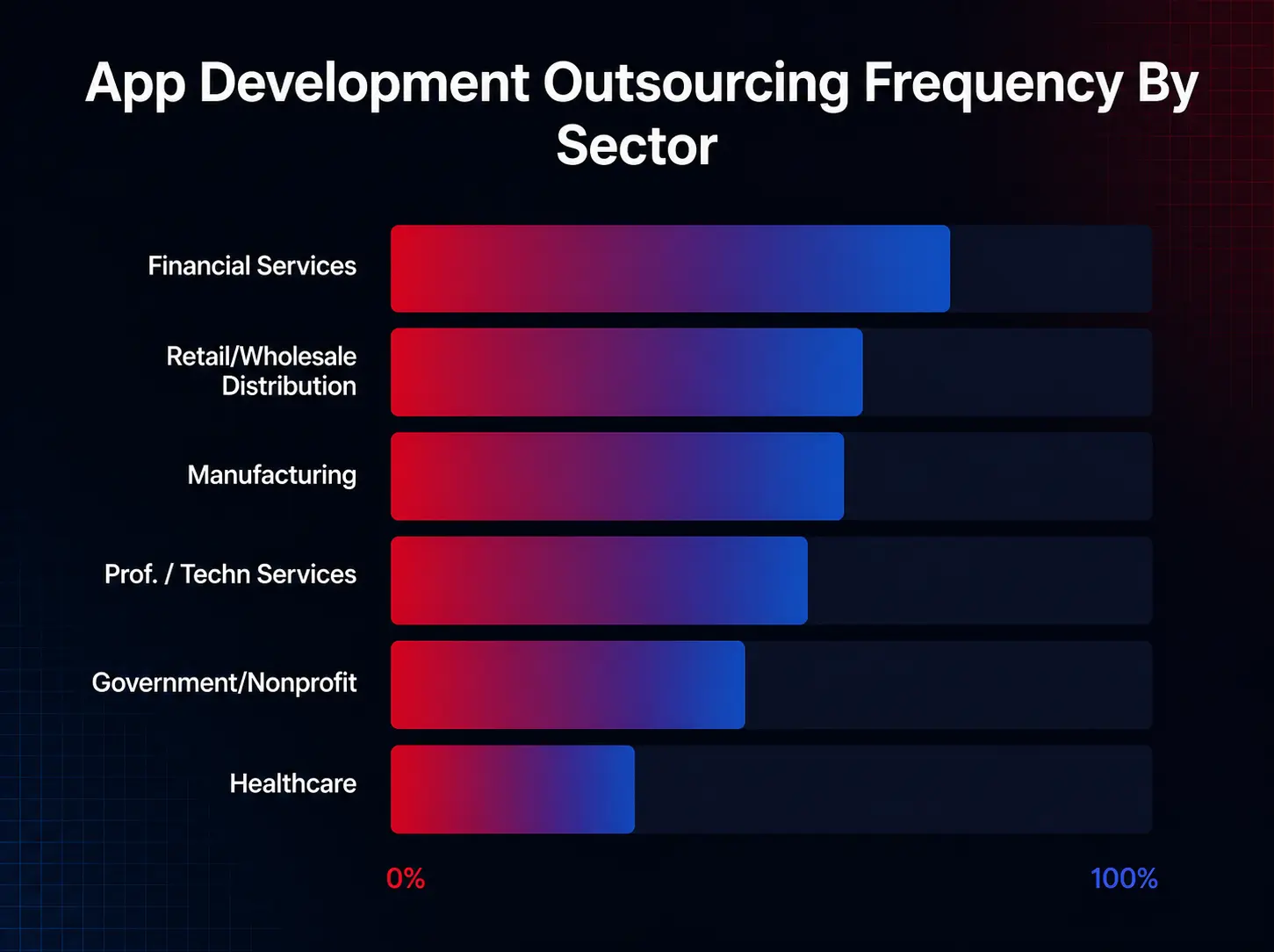
Outsourcing product development can be a game-changer for startups and enterprises alike, whether you're launching a new product or enhancing an existing one. It offers access to specialized skills, scalability, and cost efficiency. According to a report, 57% of G2000 companies utilize outsourcing, which has become a common practice among large organizations. Yet, many founders remain hesitant to take the plunge.
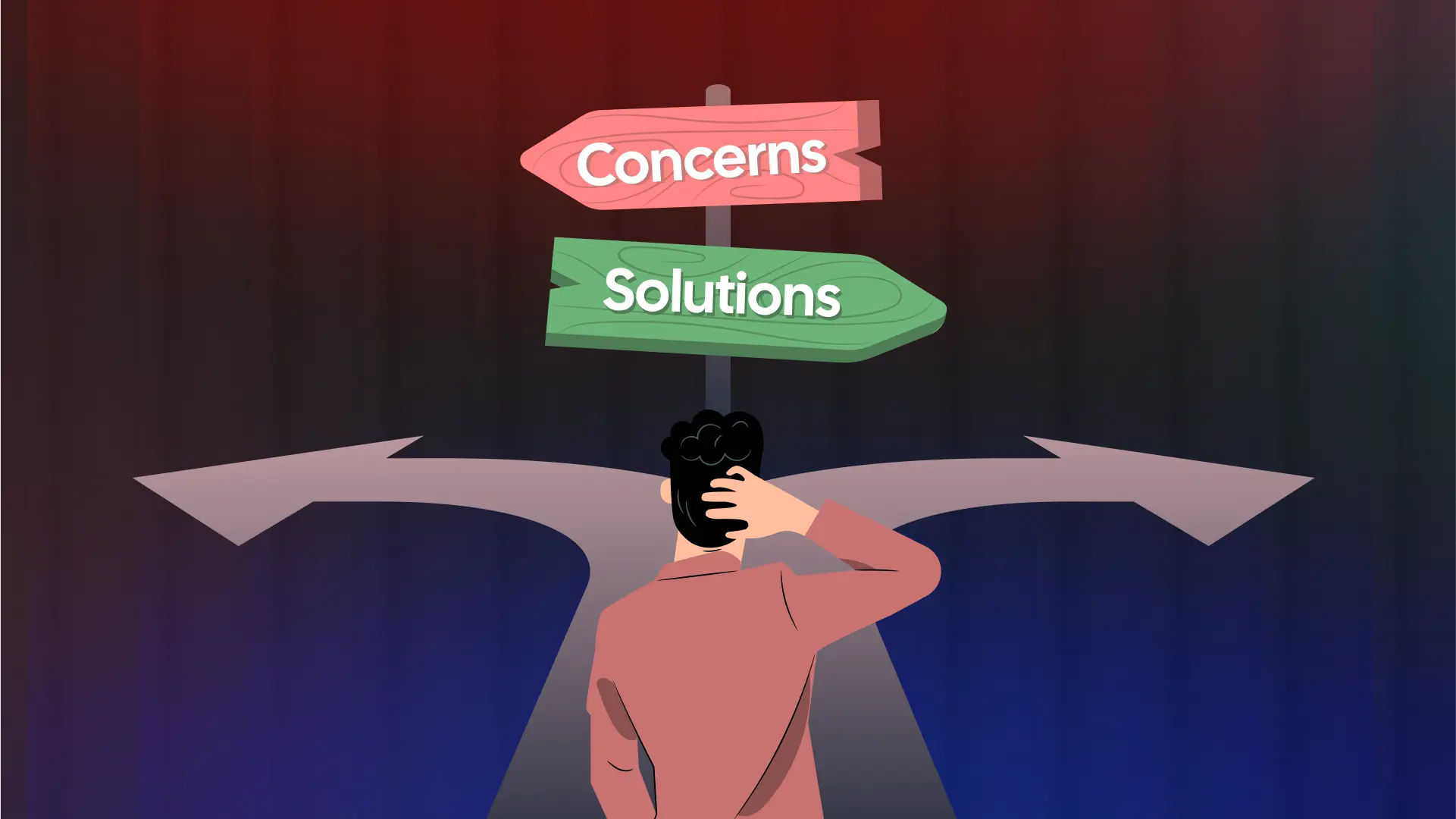
Networking with many founders and stakeholders, I tried to dig deeper into this reluctance. On deeper analysis, what I discovered is that these concerns often come from a mix of biases, past experiences, and genuine concerns. Let’s take a closer look at the key concerns and why they might not be as troubling as they seem.
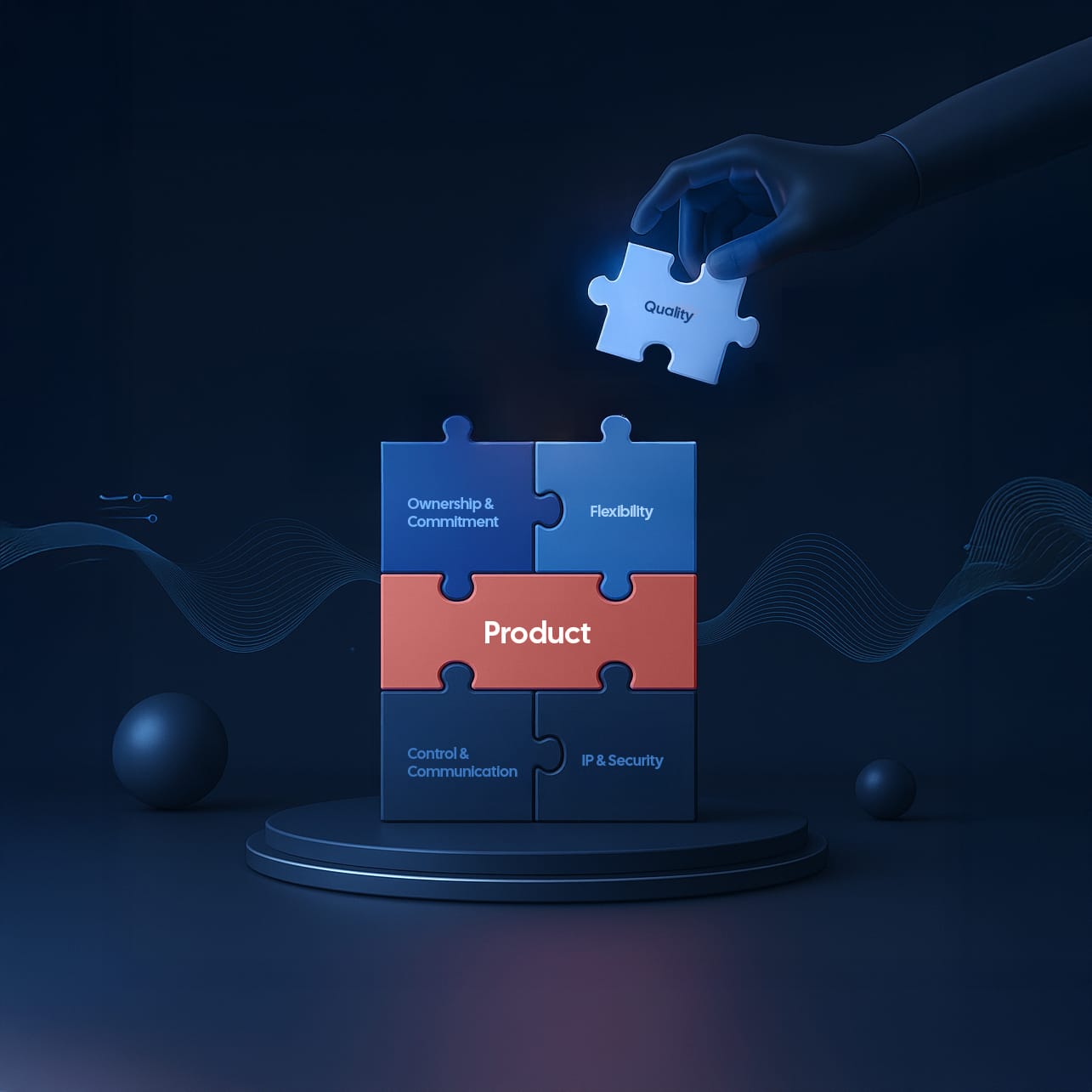
1. Ownership and commitment concerns on product development outsourcing
One of the biggest and most valid concerns is that it’s natural to be doubtful whether the outsourced team will feel a sense of ownership over the product. A successful product requires a team that’s genuinely invested, not just in the work, but in the overall success of the project. As you trust the core strength of your business with another team, each member of the team must feel that they own the product.
Solution:
The key lies in choosing an experienced product development partner. Top-tier partners dedicate full-time resources to your project, treating it with the same level of priority as their own. However, the relationship works both ways. Treating your outsourced team as an extension of your internal workforce—valuing their opinions, including them in planning sessions, and fostering open communication—helps create a unified, goal-driven environment.
When the partner’s team feels included, they’ll take ownership of the product, ensuring success beyond just completing assigned tasks.
2. Quality concerns on product development outsourcing
Historically, outsourcing was often associated with cost-saving measures, leading to a bias that outsourcing equals lower quality. However, recent data shows that 64% of IT leaders globally outsource their software development, often achieving better quality than in-house efforts.
This is especially true when partnering with specialized firms that possess the necessary expertise. Outsourcing to an expert product development partner results in higher quality than if you built the product in-house, particularly if your internal team lacks expertise in certain areas.
Product development is a complex process involving multiple disciplines: product management, UX design, architecture, backend and frontend development, database design, mobility, DevOps, quality assurance, security, and, increasingly, AI, machine learning, and IoT.
Most startups, even those with tech-savvy founders, often lack the bandwidth to handle every part effectively. It is difficult for every few individuals to have enough knowledge in all the diverse areas. This poses challenges before them in defining the right guidelines and processes for product development.
Solution:
Choosing the right partner with a proven track record, relevant case studies, and positive client testimonials is very important. Don’t be afraid to request references or samples of their previous work. Remember to regularly audit the work being delivered by the outsourced product development partner, either through in-house oversight or external reviews, to maintain quality control.
3. Flexibility concerns on product development outsourcing
A common concern is that outsourcing involves a larger, but less flexible team. Many founders and stakeholders often assume they can start with a small, multi-skilled in-house team and build out the product from there. However, outsourcing can offer more flexibility than a small in-house team.
Solution:
A reputable product technology partner typically assigns anchor team members dedicated to your project. Other than these members, the partner would also scale the team up or down as required, the biggest leverage of such a partnership. This allows you to bring in specialized expertise, like UX or DevOps, for short periods without the hassle of hiring full-time staff.
Apart from dedicated, experienced, and multi-skilled engineers, specialized professionals are always at the bank to join any phase of product development. This is a great advantage from the value perspective.
If you tried to handle all these in-house, you would need to either hire new team members (which takes time and effort) or work with freelancers (which can be hit-or-miss in terms of quality and availability). Outsourcing, on the other hand, provides access to experienced professionals on demand, making flexibility one of the biggest benefits of working with a technology partner.
4. Control and communication concerns on product development outsourcing
Occasionally, founders express concerns about not having direct control over outsourced team members. Since they’re not your employees, there’s a worry that it may be harder to manage them.
Solution:
However, this can be easily tackled by establishing clear communication channels and regular check-ins.
Daily stand-ups, utilizing tools like Slack or Teams, and a solid project management tool will help keep everyone on the same page. Transparency around priorities, timelines, and progress is key.
A trusted product development partner will make sure that their team is aligned with your goals, and they will be open to feedback and adjustments. When there is empathy, trust, and over-communication to avoid misunderstandings, and if your partner takes ownership, everything will run smoothly.
You aren’t responsible for providing the resources for the growth, appraisals, feedback loops, or up-skilling of the employees at the partner’s firm.
However, a good partner knows how important it is to care for their team. They understand the value of career planning and up-skilling in a product company. This takes a big load off your shoulders.
Moreover, if things aren’t working out with a particular team member, you can ask the partner to replace them, something that’s not as simple when dealing with your in-house employees or staff.
5. Intellectual Property (IP) and security concerns on product development outsourcing
Will the product development partner use your IP (Intellectual Property) in other projects or share it with others? What about data or security breaches, or cyberattacks?
Concerns about IP theft, data breaches, or security vulnerabilities are completely legitimate.
Solution:
However, these risks can be mitigated by choosing a reputable partner who prioritizes confidentiality and security.
Always have Non-Disclosure Agreements (NDAs) in place, and make sure your contracts clearly address IP rights.
Ask your partner how they handle conflicts of interest and ensure they have robust processes for preventing security breaches.
A reliable partner will have proven mechanisms, guidelines, and procedures in place to protect both your data and intellectual property.
Outsourcing product development: A strategic advantage for startups and scale-ups
Outsourcing product development can be an incredibly strategic move for your company. While all these concerns are valid, they can be mitigated or are simply misconceptions. The key is choosing a great product development partner who understands the importance of ownership, quality, flexibility, control, and security.
At the end of the day, outsourcing provides startups and enterprises access to specialized expertise and scalable solutions that might not be feasible in-house. With the right partner, these concerns become opportunities for growth rather than obstacles.
Need more insights on how outsourcing can work for your business? Connect with us at KeyValue. We’ll walk you through tailored solutions to help your product succeed from concept to launch.